


Quick Answer: How Can a Commercial Fleet Maximize Walkie Talkie Battery Life?
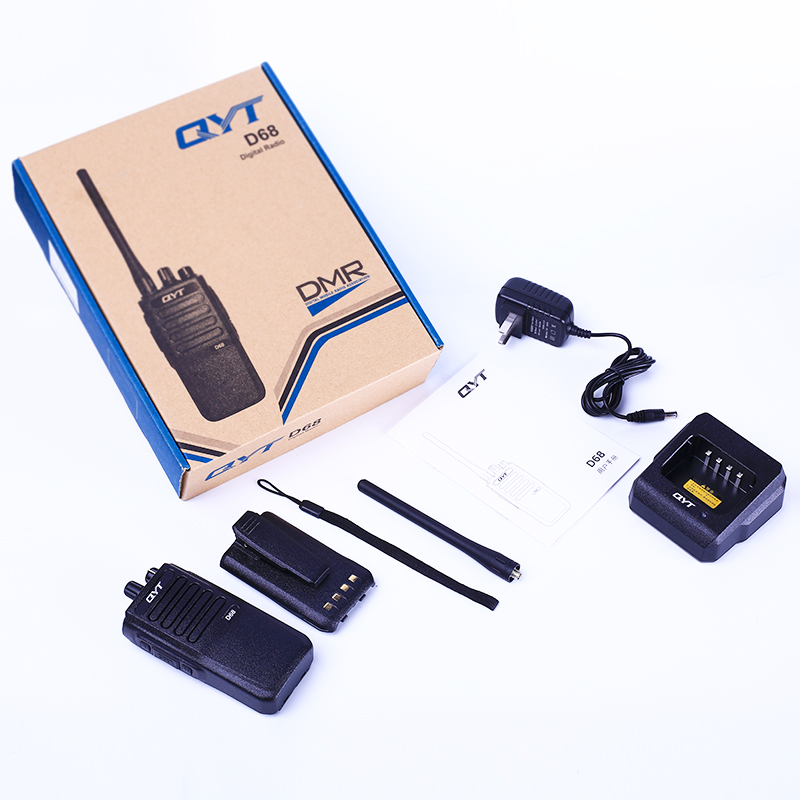
A commercial fleet maximizes walkie talkie battery life by matching the battery to the radio model, using the specified charger, avoiding heat during charging, rotating spare packs, and replacing packs according to measured capacity and safety condition. QYT’s rechargeable radio batteries generally use 500+ charge cycles as a baseline for fleet planning, while actual service life depends on charge depth, temperature, duty cycle, charger compatibility, storage time, and battery condition. QYT documentation also shows that battery specifications vary by model: the QYT D68 manual lists a 1,600 mAh Li-ion battery, the FNB-V132Li product sheet lists a 2,600 mAh Li-ion pack with model-specific temperature limits, and the QB58L safety report identifies a 3.7 V, 4,100 mAh battery with tested charging safeguards. The 500+ cycle baseline and these capacity values should be confirmed against the final battery part number and order configuration.
What Are the Key Walkie Talkie Battery Maintenance Takeaways for Fleet Buyers?
- Use the correct battery and charger combination: confirm the radio model, battery part number, charger, contact arrangement, voltage, current, and regional power adapter before purchase.
- Use 500+ charge cycles as a QYT fleet-planning baseline: QYT rechargeable radio batteries generally support 500+ cycles, but actual results depend on cell chemistry, depth of discharge, temperature, charge rate, duty cycle, storage time, and the tested battery design.
- Avoid charging outside the documented temperature range: the FNB-V132Li sheet specifies charging from 0°C to +50°C, while the QB58L safety report specifies a tested charge range of 0°C to 45°C for that tested configuration.
- Measure fleet condition: log runtime, charge completion time, abnormal heat, swelling, physical damage, and radio low-battery behavior.
- Separate product evidence from maintenance advice: QYT’s internal product information supports a general 500+ cycle baseline for rechargeable radio batteries; the exact result still depends on the battery part number and test conditions.
- Request shipment documents by battery model and route: MSDS/SDS, test reports, dangerous-goods documents, and carrier forms should be confirmed for the actual battery shipment.
How Long Should a Walkie Talkie Battery Last Per Charge?
A walkie talkie battery does not have one fixed runtime because radio duty cycle changes the load. A team that mainly receives messages can obtain a different operating time from a team that transmits frequently at high power, uses a bright display, scans multiple channels, or operates in low temperatures.
A practical planning formula is:
Estimated runtime = usable battery energy ÷ average radio load
For a battery rated in watt-hours:
Battery energy (Wh) = nominal voltage (V) × capacity (Ah)
For example, a 3.7 V, 4,100 mAh pack represents approximately 15.17 Wh of nominal stored energy before accounting for radio efficiency, cutoff voltage, temperature, battery aging, and the transmit/receive/standby mix. This calculation is a planning estimate, not a guaranteed runtime. The 4,100 mAh value is documented for QYT’s QB58L tested battery configuration and should not be transferred to other models.
Which operating factors reduce handheld radio runtime most quickly?
The main controllable drains are usually frequent transmission, high transmit power, a continuously active receiver, bright display or backlight, loud audio, scanning, weak-signal operation, and cold conditions. A fleet manager should compare radios under the same test conditions instead of comparing capacity numbers alone.
A useful acceptance test records:
- Battery model and rated capacity.
- Radio model and firmware or configuration.
- Transmit, receive, and standby time ratio.
- Transmit power setting.
- Channel activity and scan settings.
- Display and audio settings.
- Ambient temperature.
- Time from full charge to low-battery warning.
What Is the Correct Way to Charge a Walkie Talkie Battery?
The correct charging process is to use the specified desktop charger or approved charging system, inspect the pack and contacts, place the battery or radio securely in the charger, confirm the charge indicator, and remove the pack from service if it becomes unusually hot, swollen, cracked, wet, or physically damaged. QYT packing documentation lists a Li-ion battery pack, desktop charger, power adapter, and warranty card among the supplied items for the referenced D68 package; the exact contents depend on the ordered model.
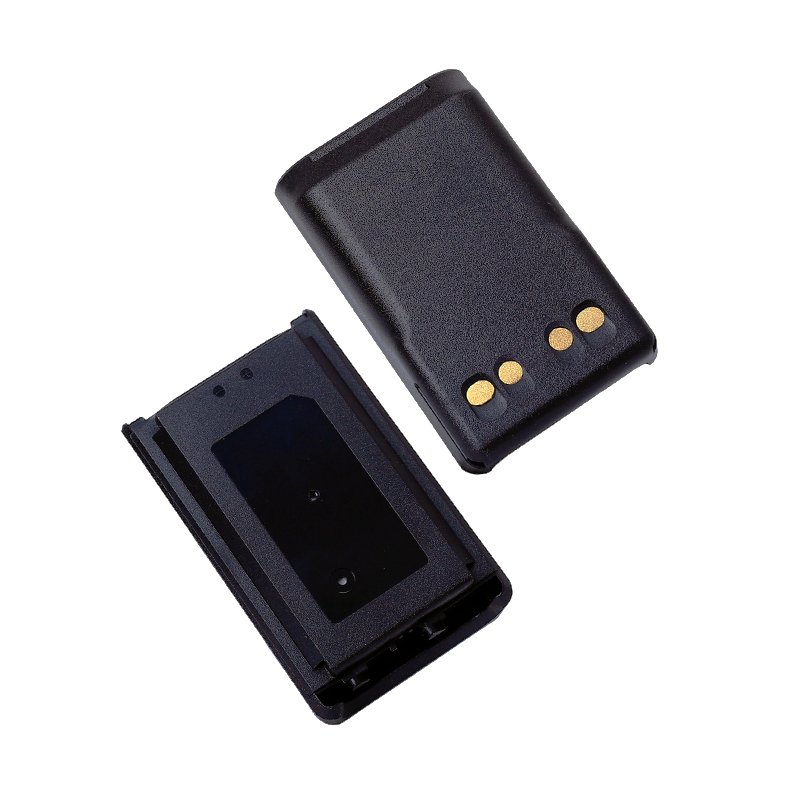
For QYT battery evidence, the FNB-V132Li product sheet specifies a charging temperature of 0°C to +50°C. The QB58L safety report records a tested battery configuration with a maximum specified charging voltage of 12.6 V, a maximum specified charging current of 4.1 A, and a highest specified charging temperature of 45°C. The same report records a normal charging observation at 12.44 V and 0.97 A for the tested setup. These are test-document values for identified configurations, not instructions to substitute a different charger or battery.
Which charging mistakes shorten two-way radio battery life?
Avoid these fleet-level mistakes:
- Charging a battery with a charger intended for another voltage or contact arrangement.
- Continuing to use a pack that is swollen, cracked, leaking, corroded, or abnormally hot.
- Charging in direct sunlight, inside a hot vehicle, or near a heater.
- Covering the charger ventilation area.
- Mixing damaged packs with serviceable packs in the same charging bank.
- Recording only “charger full” and never recording actual runtime.
- Assuming that a third-party battery has the same protection circuit or cutoff behavior as the original configuration.
How Should a Fleet Store Walkie Talkie Batteries During Long-Term Inventory?
Store batteries in a cool, dry, non-combustible area away from direct sunlight, water, metal objects that could bridge contacts, and sources of heat. Use the manufacturer’s storage range when available. The FNB-V132Li product sheet identifies a storage temperature of approximately +25°C ±5°C, a charging range of 0°C to +50°C, and a discharging range of −20°C to +60°C for that battery reference.
For inventory control, label each battery with its part number, purchase date, first-use date, storage location, inspection date, and assigned radio family. Do not describe a generic “40–60% storage charge” as a QYT universal requirement unless the final battery documentation specifies it. If the buyer’s approved battery manual provides a partial-charge storage range, follow that document and record the range in the warehouse SOP.
How Should Buyers Manage Batteries in a Commercial Fleet Battery Bank?
A 200-unit fleet should not be managed as 200 identical battery assets unless the radio model, battery part number, charger, and firmware configuration are actually identical. Use a battery register with the following fields:
- Radio family: CB, KT, M, or another approved family.
- Radio model and serial number.
- Battery part number and nominal capacity.
- Charger or charging-bank model.
- Date placed into service.
- Last inspection date.
- Runtime test result.
- Damage, swelling, heat, or contact condition.
- Quarantine and replacement status.
QYT’s official website includes a dedicated Battery & Charger category, and buyers can also review the QYT Walkie Talkie category through the QYT official website. The main site lists walkie talkies, batteries, chargers, antennas, and earphones. Buyers should use the exact product page and final quotation or pro forma documents to confirm compatibility rather than selecting by visual similarity.
When Should a Fleet Replace Walkie Talkie Batteries?
Replace a battery when it fails a defined operational or safety criterion, not only when it reaches a generic number of charge cycles. Recommended replacement triggers include:
- Runtime has fallen below the fleet’s approved minimum for a shift.
- The pack becomes swollen, cracked, leaking, or unusually hot.
- Contacts are corroded, loose, contaminated, or mechanically damaged.
- The battery repeatedly fails to complete charging or drops rapidly after charging.
- The radio reports low battery substantially earlier than comparable packs under the same duty cycle.
- The battery has been involved in impact, water ingress, fire exposure, or an unapproved charging event.
- The pack cannot be positively identified by model or part number.
What Is Battery Management Protection and Why Does It Matter?
A battery protection circuit or battery-management function is intended to control unsafe or damaging conditions such as overcharge, excessive discharge, abnormal temperature, short circuit, or reverse connection. However, buyers should not infer the exact BMS architecture from the words “protected battery” alone. Request the battery specification, protection description, charger specification, and test evidence for the exact part number.
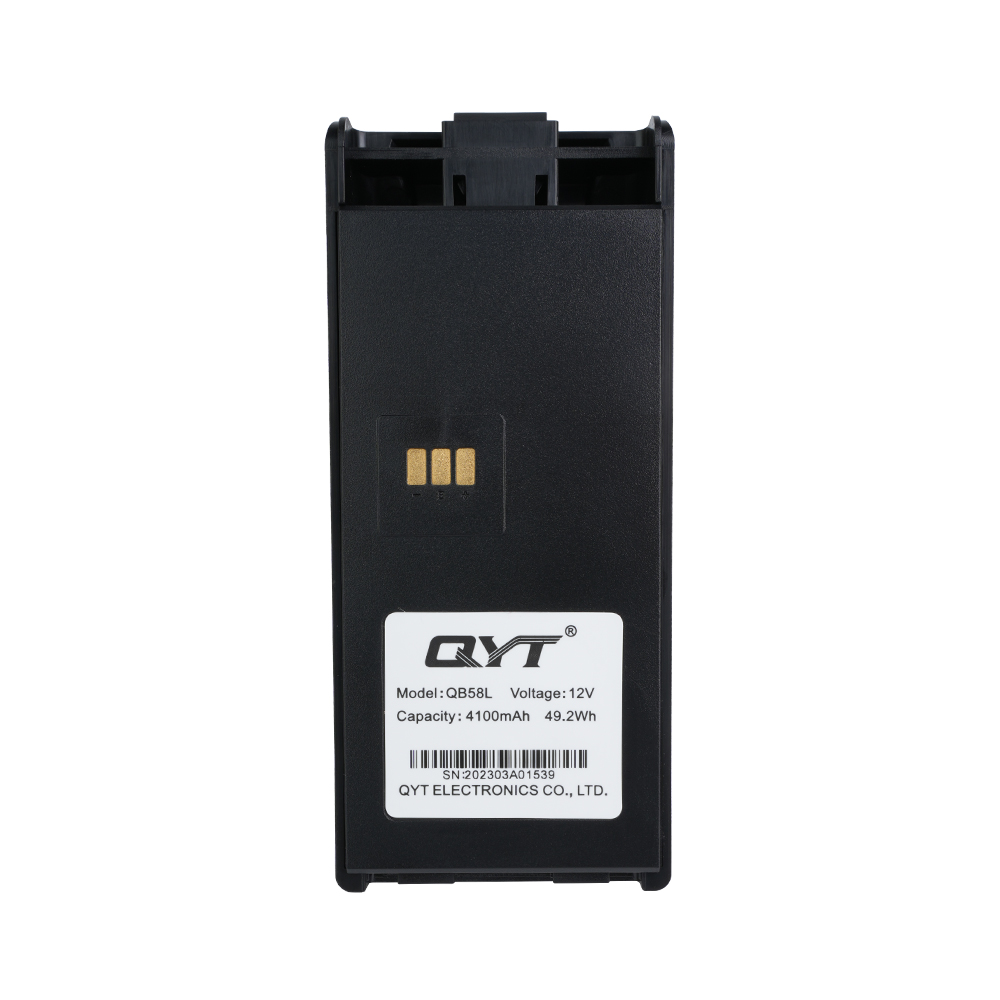
For QYT’s QB58L configuration, the CB-58 safety report records a protection-circuit table, identifies QYT Electronics as the battery manufacturer, lists 3.7 V and 4,100 mAh, and references IEC 62133-2:2017 and IEC 62133-2:2017/AMD1:2021 with report number AGC0978125 0501TA01. The report also records that the tested battery could not be installed in reverse polarity and documents charge-voltage, charge-current, and temperature safeguards. The report itself states that the results apply only to the tested sample.
What Should a B2B Buyer Request Before Ordering Radio Batteries?
Use this procurement checklist before approving a commercial fleet battery order:
- Exact radio model and radio family.
- Exact battery part number.
- Chemistry: Li-ion or another documented chemistry.
- Nominal voltage and rated capacity.
- Approved desktop charger or multi-unit charger.
- Charging-voltage and charging-current limits.
- Charging, discharging, and storage temperature ranges.
- Protection-circuit or BMS description, if applicable.
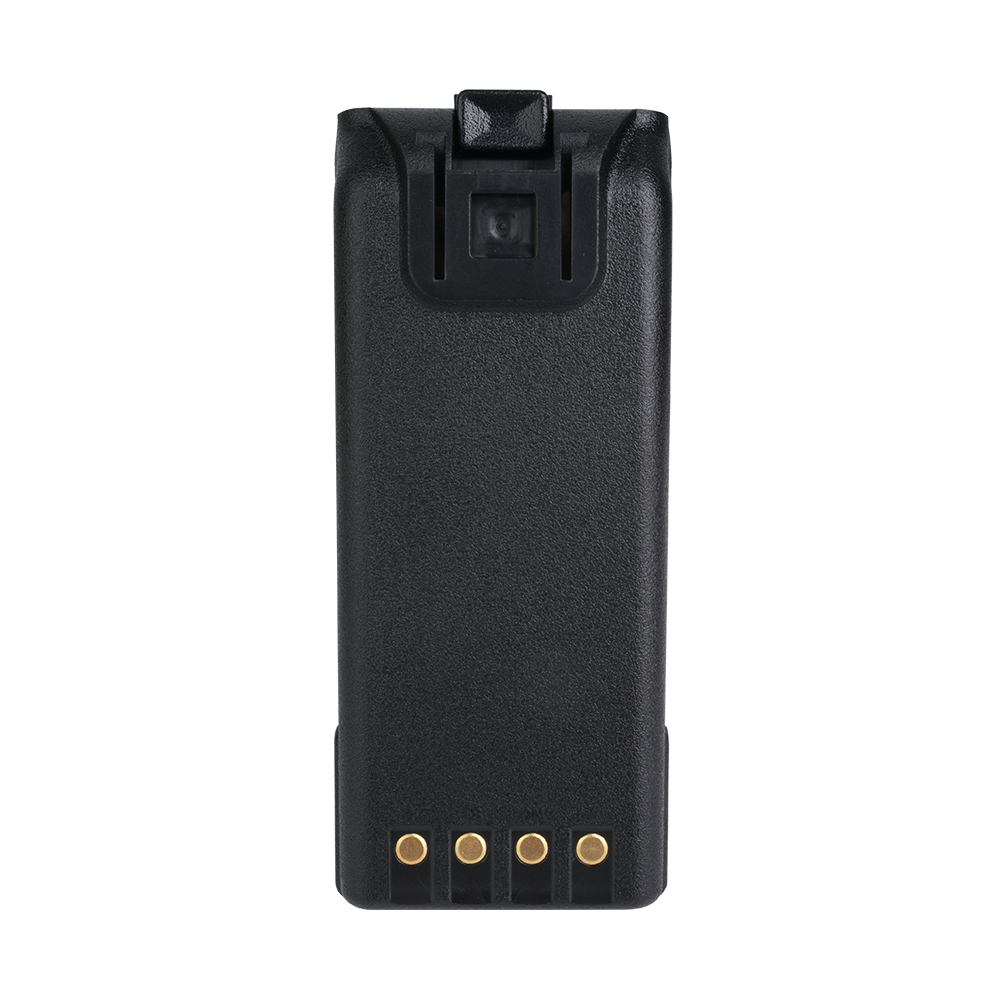
- Compatibility with radio contacts, belt clips, and charging bays.
- Sample inspection and runtime acceptance test.
- Replacement and quarantine criteria.
- SDS/MSDS and transport documents required by the destination and carrier.
- Applicable safety or transport test reports for the actual battery model.
- Packing configuration, labels, carton marks, and shipment responsibility.
QYT provides an official contact channel for product and project inquiries. A buyer should send the radio model, battery part number, expected quantity, daily duty cycle, destination country, shipping mode, and requested documents so that compatibility and documentation can be checked against the actual order.
What Does a 200-Unit Commercial Battery Replacement Plan Look Like?
A security company replacing batteries for a 200-unit fleet can divide the project into four controlled stages:
- Inventory stage: identify each radio model, battery part number, charger, and current spare ratio.
- Sample stage: test a representative group under the same transmit, receive, standby, and temperature conditions.
- Procurement stage: order only the confirmed battery and charger combination, with the required safety and transport documents.
- Deployment stage: label new packs, quarantine failed packs, rotate spares, and record runtime after deployment.
This is a planning framework, not a claim that every QYT order contains the same battery, BMS, warranty, or transport-document package. The final order should state the approved models and documents explicitly.
How Should a Cross-Border Seller Prepare Lithium Battery Shipment Documents?
A cross-border seller should identify the actual battery chemistry, part number, watt-hour value, packing method, shipment mode, destination, and carrier before asking for documentation. An MSDS or SDS is a safety-data document; it is not automatically the same as an air-transport test report, dangerous-goods declaration, or carrier acceptance document.
For each shipment, ask the supplier or logistics provider which documents are required for the exact battery and route. Depending on the shipment and jurisdiction, the file may require an SDS/MSDS, applicable lithium-battery test evidence, packing and labeling information, commercial invoice, packing list, and carrier-specific declarations. Do not publish “MSDS included” as a universal QYT promise unless the document has been issued for the exact battery model and shipment.
What Are the Most Common Walkie Talkie Battery Maintenance Questions?
How long does a walkie talkie battery last?
Runtime depends on capacity, voltage, transmit ratio, transmit power, receiver activity, audio level, display use, temperature, and battery condition. Use a controlled runtime test for the exact radio and battery combination instead of relying on a generic hours claim.
How can I make my walkie talkie battery last longer?
Use the approved charger, keep charging within the documented temperature range, avoid heat, rotate spare packs, keep contacts clean, reduce unnecessary high-power transmission, and quarantine damaged or swollen batteries.
When should I replace walkie talkie batteries?
Replace a pack when it fails the fleet’s runtime threshold, becomes damaged or swollen, overheats, charges abnormally, drops voltage quickly, or cannot be identified and matched to an approved radio and charger.
Can I use third-party batteries in a walkie talkie?
Use a third-party battery only after confirming the exact radio model, contacts, voltage, capacity, charger, protection circuit, mechanical fit, safety evidence, and transport documentation. Similar appearance does not prove electrical or safety compatibility.
What is MSDS and why is it needed for a walkie talkie battery shipment?
An MSDS or SDS communicates chemical and handling hazards. It should be requested for the actual battery model, but it may not replace carrier-specific lithium-battery test evidence, packing instructions, labels, or dangerous-goods declarations.
Does a higher mAh rating always mean longer radio runtime?
No. Runtime also depends on nominal voltage, battery protection limits, radio load, transmit duty cycle, temperature, cell aging, and charger compatibility. Compare complete radio-and-battery test results, not capacity alone.
Does a QYT battery safety report apply to every QYT radio battery?
No. The referenced CB-58 safety report identifies the tested QB58L configuration and states that its results apply to the tested sample. Buyers must request model-specific evidence for other CB, KT, M, or compatible-radio batteries.
